Доклад

Types of Evidence: Collection, Storage, and Handling Techniques
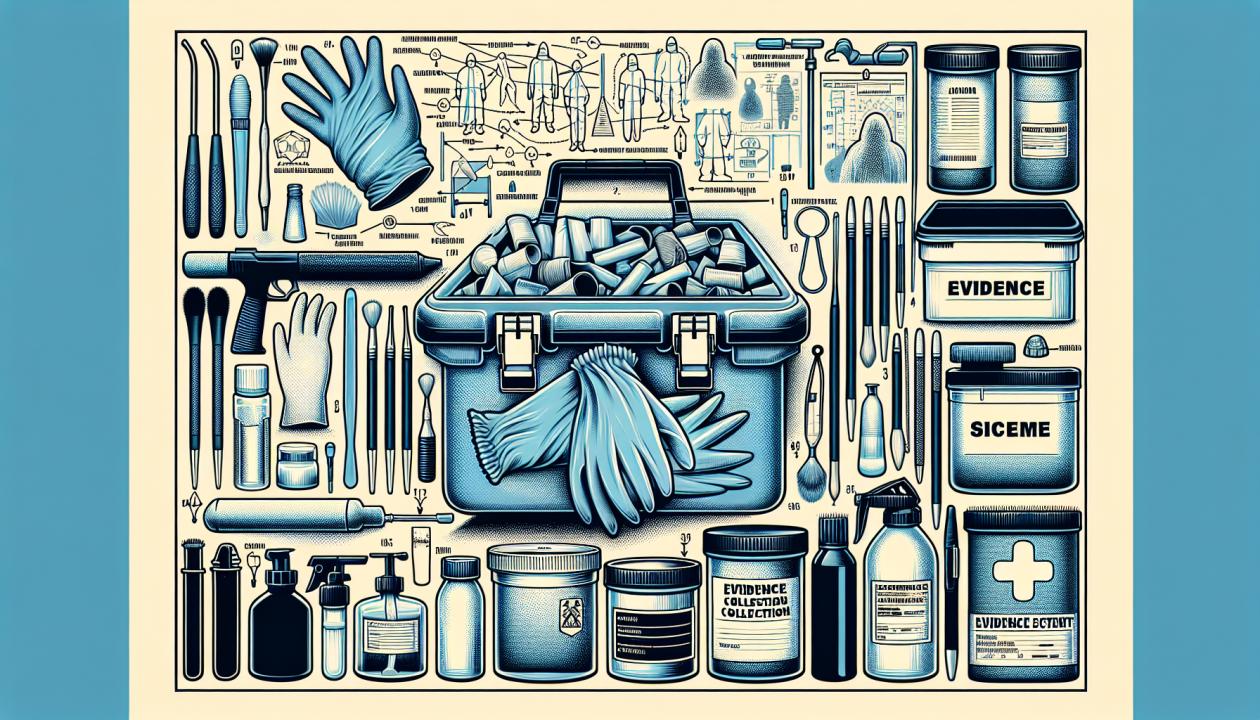
Illustration of an evidence collection kit that includes personal protective equipment (PPE) like gloves and masks, various storage containers for different types of evidence, and tools for collecting biological samples such as swabs. The background shows a crime scene with outlines and markers for evidence collection.

This report examines the various types of evidence encountered in criminal investigations, focusing on their collection, storage, and handling techniques. It details essential tools used in evidence collection kits, such as personal protective equipment (PPE) and specialized containers for different types of evidence. The report emphasizes the importance of proper methods to prevent contamination, ensuring the integrity of evidence like biological samples for DNA testing, fingerprints, and physical traces such as blood and bullet fragments. By understanding the specific requirements associated with each type of evidence, law enforcement personnel can maintain the reliability and validity of the evidence throughout the investigative process. This knowledge is crucial for the successful prosecution of criminal cases.

Предпросмотр документа

Наименование образовательного учреждения
Докладна темуTypes of Evidence: Collection, Storage, and Handling Techniques
Выполнил:ФИО
Руководитель:ФИО

Введение

Текст доступен в расширенной версии

Описание темы работы, актуальности, целей, задач, тем содержашихся внутри работы.

Introduction to Types of Evidence

Текст доступен в расширенной версии

This section establishes a foundational understanding of different types of evidence in criminal investigations, including physical, biological, and digital evidence. It emphasizes the role of evidence in crime-solving and legal proceedings, highlighting its various forms and the necessity for meticulous handling to preserve their integrity. This introduction prepares the reader for a deeper inquiry into specific collection and storage techniques.

Collection Techniques for Different Evidence Types

Текст доступен в расширенной версии

This section explores detailed methodologies for collecting diverse types of evidence, including fingerprints, bodily fluids, and weapons. It covers best practices, recommended tools, and common pitfalls to avoid during collection processes. The significance of using appropriate techniques is underscored, linking its relevance to the integrity required for subsequent storage and analysis.

Storage Solutions for Collected Evidence

Текст доступен в расширенной версии

This section examines specialized storage options tailored for different kinds of evidence to ensure their preservation prior to analysis or court presentation. It discusses materials used for packaging, environmental controls necessary to maintain sample integrity, and protocols that must be followed during this phase. By transitioning from collection to storage, it underscores the critical nature of maintaining quality in preserved evidence.

Handling Procedures: Best Practices

Текст доступен в расширенной версии

This section provides guidelines on proper handling procedures essential after evidence has been collected and stored but before it is tested or presented in court. It outlines potential risks associated with mishandling evidence and stresses protocols that protect against contamination or degradation, thus maintaining evidential value. Transitioning towards chemical and forensic analyses, it prepares readers for upcoming discussions about evaluation processes.

The Role of PPE in Evidence Collection

Текст доступен в расширенной версии

This section delves into the significance of personal protective equipment (PPE) during the process of collecting all forms of evidence, especially biological samples which are at risk for contamination. It discusses recommended gear types, their functions, and legal implications surrounding their use within crime scene investigations. By emphasizing PPE’s pivotal role, it bridges towards an understanding of ethical considerations in forensic work discussed later.

Contamination Risks: Preventive Strategies

Текст доступен в расширенной версии

In this section, potential contamination risks faced during different stages—collection, storage, and handling—are critically analyzed alongside effective preventive strategies that can be implemented by law enforcement personnel. Real-life examples are illustrated to showcase impact factors influencing contamination incidents within investigations while emphasizing training needs for personnel involved in these critical stages.

Chain of Custody: Importance and Enforcement

Текст доступен в расширенной версии

This section defines chain-of-custody as it pertains to criminal investigations along with its critical role in safeguarding evidential consistency throughout investigative processes until trial proceedings occur. It reviews legal requirements for documenting custody along with best practices law enforcement must follow to ensure reliable records persist over time—even amidst changing technology that may impact future methodologies surrounding custody enforcement strategies on modern cases.

Заключение

Текст доступен в расширенной версии

Описание результатов работы, выводов.

Список литературы

Текст доступен в расширенной версии

Список литературы по ГОСТу

Нужен доклад на эту тему?
  • 20+ страниц текста20+ страниц текста
  • 80% уникальности текста80% уникальности текста
  • Список литературы (по ГОСТу)Список литературы (по ГОСТу)
  • Экспорт в WordЭкспорт в Word
  • Презентация Power PointПрезентация Power Point
  • 10 минут и готово10 минут и готово
Нужен доклад на эту тему?20 страниц, список литературы, антиплагиат
Нужен другой доклад?

Создай доклад на любую тему за 60 секунд

Топ-100